- This article contains:
- Halloween History in Victorian Days
- Crafts for Kids and Make Your Own Costume Ideas
- Things to do with a leftover pumpkin.
- Eat your healthy Pumpkin flesh and seeds! Directions for Roasting Fresh Pumpkin Seeds and Making Pumpkin Seed Powder.
- A Spicy Pumpkin Ferment Recipe that will wake up your microbiome and tickle your taste buds.
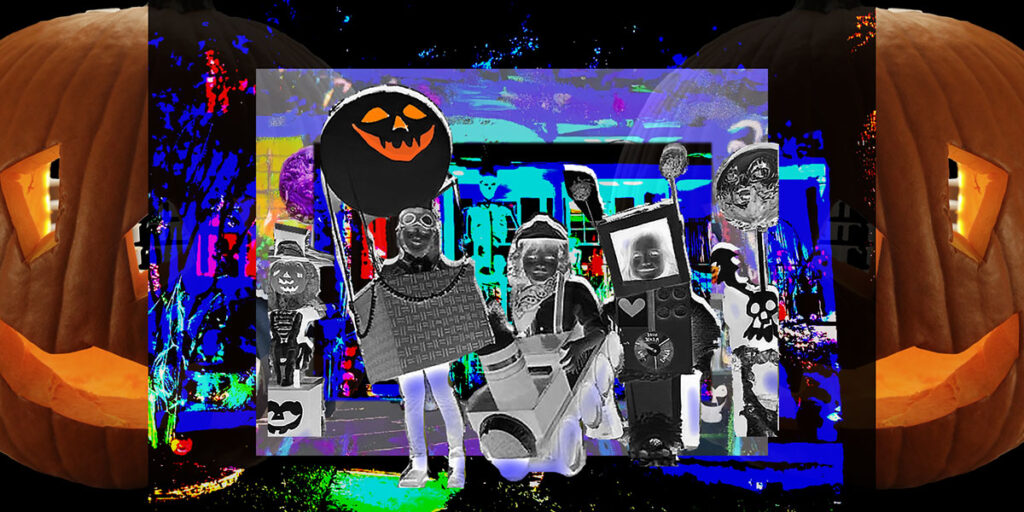
With Halloween just around the corner. Scarry is definitely ‘IN’, but do you ever wonder how Halloween started?
Halloween is generally regarded as a relatively recent occurrence, considering the passage of hundreds of years. Some even feel it is the next thing to evil, but many regard it as an excuse for some darn good fun and a few bags of sweet treats. After all, these days we need an excuse for sweets since sugar is often a no-no in the health world. But ghosts and goblins aside, sweets could help make the gruesome slide by that much more easily.
Actually, Halloween is about 2,000 years old. It originated as the ancient Celtic, Irish, and French festival of Samhain. It was a joyous Celtic celebration marking the end of an abundant harvest, accompanied by good food. Possibly a time to be proud of all the work, making sweet jams and storing up food preserves to keep during the cold winter months. Unlike today, without the foods stored for winter, many could die of starvation. Samhain, like Halloween, was celebrated on October 31st and continued into November 1st.
As it is now, the loss of anyone near and dear was an emotional hardship, and as a comfort, it was considered that this time of year, when the weather changes, was a time when the spirit world could be closer than at other times. People would dress up in costumes and light bonfires to light a loved one’s way back. Often, food offerings were left, thinking that if the deceased were still in the ghost world, some food would hasten their journey to the realm of heaven.
The ‘Otherworld,’ as it was called, was a kind of limbo after passing on. It was believed that departed spirits could visit. This was both hoped for and feared, as those of a more sociable disposition during life were wished for, yet those who had been nasty in this world were feared more during Samhain. So, like today, both happy and fearful costumes were worn to either welcome or frighten off the mischievous spirits. Although these days, the costumes are chosen for their most inventive and frightful appearance.
Connection to the Otherworld: It was believed that spirits could easily cross into the human world, making it a perilous yet spiritually significant time.
Samhain was also seen as a time of introspection, to look back and set new goals or make a personal transformation by acknowledging mistakes inwardly. In this regard, the harvest bounty festival of Samhain was a precursor to modern-day Halloween and Thanksgiving.
When the Roman Empire conquered Celtic territory, festivals were combined to commemorate the dead and honor Pomona, the goddess of apples and fruit trees. Bobbing for apples on Halloween may have begun during Samhain. Pagan festivals were replaced by Christian holidays, such as when Pope Gregory III moved the observance to honor saints called All Saints’ Day (All Hallows’) from May to November 1st. The night before All Hallows’ Day became known as All Hallows’ Eve, which was eventually shortened to Halloween.
When the significant migration of Irish immigrants came to America in the 19th century, they brought their traditions with them. Trick-or-treating emerged from the Scottish “guising” and English “souling” traditions, where people went door-to-door in costume to collect food or money. In the 1930s, to ward off the pranks and vandalism, the gifting of candies, apples, or homemade fudge became more the norm.
Carving lanterns from vegetables originated in Ireland, where they were traditionally made from turnips or potatoes to ward off evil spirits. Since pumpkins are prevalent in the fall and much easier to carve, we now have the bright Jack-o’-Lantern instead of a turnip. Thank goodness, carving a turnip does not seem as interesting to me. Halloween is a blend of many cultures and a time to let out, then toss away your aggravations, or at the very least have a lot of fun exercising your funny bone!
Always a reason for a Party
In the Victoria age or now, we all need an excuse now and then for a party. Formal invitations were sent to Victorian Parties to attend at someone’s home for Halloween. Invitations were often inventive, such as the presentation of a handmade cloth doll dressed as a witch, accompanied by a note tied around her waist. This was also the beginning of leaving Jack-o’-Lanterns on doorsteps as a sign of those celebrating.
The Party would start at a particular time, and when guests arrived, the host’s house would be dark, lit only by the fireplace, Jack-o’-Lanterns, or candles. Totally spooky for your arrival! The mystery would be furthered as guests were greeted by a dark-robed figure who would lead them to the cellar, the kitchen, or another room where they could take off their coats. Spooky in the dark, they would then lead the way to the parlor, where they would gather around a fireplace, telling ghost stories, playing games, and enjoying food and drink. As they became more jovial, dancing continued until the wee hours.
Unmarried girls looked forward to Halloween, where if they looked in a mirror, they might catch a glimpse of a future husband. This was an ideal form of matchmaking in the sense that a young man previously chosen by either his parents or the girl’s would be positioned just so that the girl could see him, in a mirror during a party. The girl would see it as an omen, and the young man, approached by a smile, would take a second look, encouraged by his mother. Very often, a Christmas wedding was the result.
Victorians were a superstitious lot and quite afraid of ghosts. In this regard, if they had to go out at night, they would wear masks to hide their identities from any ghosts that might be wandering around. Food, it was thought, was the mainstay to ward off ghosts, who were possibly just those down on their luck lurking in shadows. Especially on All Hallows Eve, huge bowls of food were placed at entrances, and the poor would gratefully take full advantage.
In the Victorian era, street parades with costumes would be held, where the poor would beg for food, much like trick-or-treating, and consequently be given “Soul Cakes” in return. It was well known that if you received a Soul Cake, it was your duty to pray for that family. Sometimes, coins were baked into the cakes by the givers to ensure larger prayers. These practices became known as going A-Souling. It was not seen as much like charity as it was a giving and a receiving. Obviously, prayers in those days were worth paying for! The practice was eventually taken up only by the children who would go A-Souling, bringing back to their parents or guardians the food and money for all to enjoy. Not unlike today, when parents go through the candy bags to pick out some choice treats for themselves and make sure the contents are all safe.
Halloween in the 20th and 21st Century
From the 20th century to the present, the holiday has evolved to focus more on the community and neighborhood. Anything that was deemed to be too frightening or grotesque was taken out of Halloween. It was at this time that the holiday became more focused on children than adults. But that did not last, as adults love dressing up, and it is a good time for the whole family. Often, this season is almost the only time you get to see all the other people in your neighborhood, and frequently friendships start here.
Crafts and Activities
- A Big List of Make-It-Yourself Kids Halloween Costumes, So Cute!
- Bobbing for apples in a bucket of water, or making candied caramel apples.
- Decorating outside your house beginning in September – Great Ideas Made Easy.
- Roll a Frankenstein Craft and Game
- Make a Ghost Window with Popsicle Sticks. Fun for little kids
- Make Easy Puffy Ghosts and More Kids’ Crafts for Halloween.
What to do with Leftover Pumpkins
Worms love Pumpkins, so if you practice Vermiculture, pumpkins are a bonus food item. But even if you have a garden or a yard, earthworms and more will compost pumpkins for you. Just be sure to cut them into small pieces and cover them with soil and leaves, or better yet, dig a hole and bury them with leaves. In the spring, the pumpkins will have magically disappeared while enriching your garden soil.
Leave pumpkins, minus any candle wax, for local wildlife to enjoy. Squirrels and deer love to munch on Pumpkin. Use the pumpkin as a fall bird feeder by filling it with birdseed and hanging it from a tree. Check with your local community for pumpkin collection drives or for farms that accept donations for their animals.
Eat Your Pumpkin: Cut the pumpkin into cubes and trim off the skin. Bake the flesh and use it in soups and stir-fries. You can add small amounts to homemade bread dough for extra fiber and nutrition.
Roast Spicy Pumpkin Seeds. Wash the seeds and drain them. Sprinkle with salt, pepper, powdered garlic, and other seasonings to your taste, and add a little oil. Blend and spread the mixture on a parchment paper-lined cookie sheet, then roast in a 350°F oven for about 20 minutes. They are tasty, but if the hulls are too hard, don’t swallow; chew out the flavor. You can also use a coffee grinder to grind up the pumpkin seeds, then sieve them with a strainer, and use the resulting powder as a thickener in soups or as a spicy, fiber-rich flavoring in bread dough. (If you are going to grind them, you can roast them plain.)
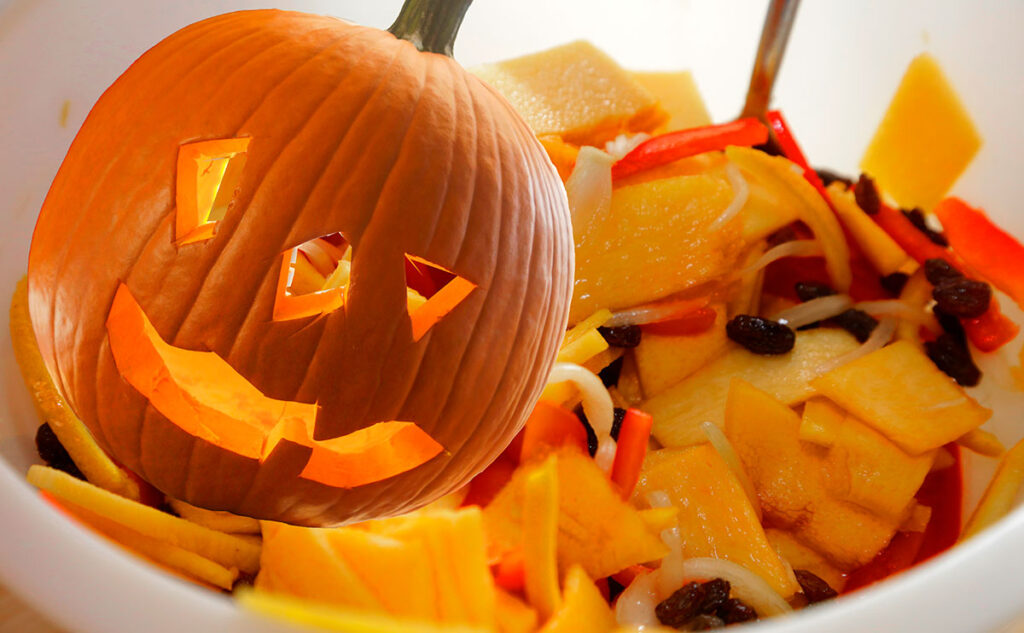
Spicy Fermented Pumpkin Recipe.
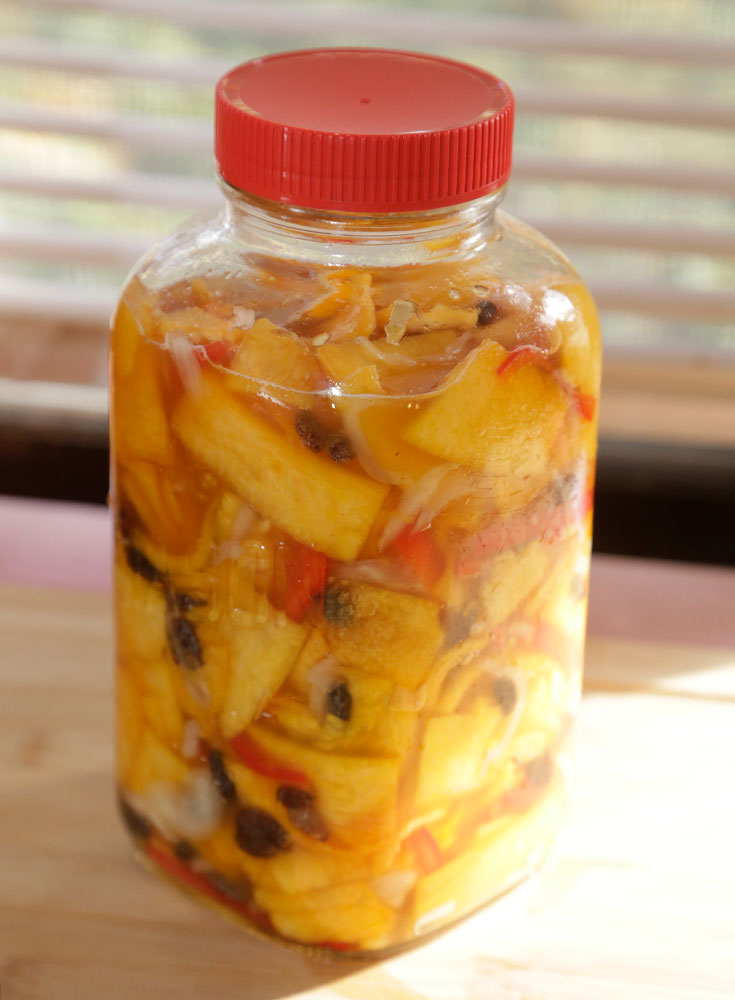
Fermented Foods: Fermented foods are good for your gut. They provide beneficial live bacteria, known as probiotics, which feed and balance the gut microbiome, improve digestion by predigesting complex compounds, and help boost the immune system. They also increase the bioavailability of vitamins and antioxidants, produce beneficial compounds such as short-chain fatty acids (SCFAs), and can help reduce inflammation in the gut.
Pumpkin Flesh, whether raw or cooked, is a good source of Protein, Fiber, Vitamin A, Vitamin C, Vitamin E, Riboflavin, Copper, Potassium, Pantothenic acid, and Manganese. (You get more nutrition by eating the flesh raw, so this fermentation makes it tasty)
Pumpkin seeds contain these essential nutrients: B vitamins such as Thiamine (B1), Riboflavin (B2), Niacin (B3), Pantothenic acid (B5), Vitamin B6, and Folate (B9), as well as Vitamin C and Vitamin E. They also contain Vitamin K and contain precursors to Vitamin A, such as beta-carotene.
12
30
minutesA Condiment
Ingredients:
Raw Pumpkin, thinly sliced (enough to fit in a quart jar)
1 small white onion, thinly sliced
1 sliced red sweet pepper (seeds removed)
1 tbsp. Sea Salt (or Pickling salt, which contains no iodine)
1/4 cup Honey
1/2 tsp. Cinnamon
2 tbsp. Ginger Juice (grate fresh ginger and squeeze out to use only the liquid)
Peel from 1/2 of an orange, julienned
1/2 cup raisins
1 whole Clove
1 Apple peeled and grated
1/4 tsp. Powdered Ginger
Directions
- This recipe yields a little more than one quart of Spicy Pumpkin Ferment. You can increase the amount as desired.
- Slice enough raw pumpkin flesh to fit into a 1-quart wide-mouth Mason or Ball Jar. Cut off chunks, then peel off the skin and also cut off any inner pieces that have the inside of the pumpkin fibers still attached. Slice each piece thinly and place in a glass or stainless steel bowl for mixing.
- Mix all the ingredients together by hand to release the juices.
- Use a canning funnel and fill the ingredients into the glass jar.
- Leave a small amount of room at the top of the jar to allow for expansion. Ensure that all the ingredients are thoroughly covered with the juice. Place a lid loosely on the jar and set it on a countertop at room temperature out of direct sunlight for 2 to 3 days. The pumpkin will bubble and ferment.
- Check the ferment daily, both in the morning and at night, to gently push down the pumpkin as it ferments. Or place a glass weight on top to keep the ingredients under the juice. Taste it the second day, and if it’s sour enough, you can seal the jar and place it in the fridge to use as desired.
- The Pumpkin ferment will keep refrigerated for up to two months.
Notes
- Use as a condiment. Or even a spicy addition to a vegetable stir-fry. Fermented vegetables, when cooked, are not still alive, but they remain nutritious and beneficial for the microbiome. Plus, they can add a wonderful flavor to cooked entrees and stews.