
It wasn’t something I had planned.
There was no special moment I was waiting for, no reason to expect anything unusual.
I was simply outside, watering the garden.
The Ordinary
It was one of those quiet mornings.
The kind where everything feels still, and you move from one plant to another, noticing what has grown, what needs water, what has changed since yesterday.
The chives were in bloom—small purple flowers rising above the green.
The soil was dark from watering.
Nothing remarkable.
And yet…
The Moment
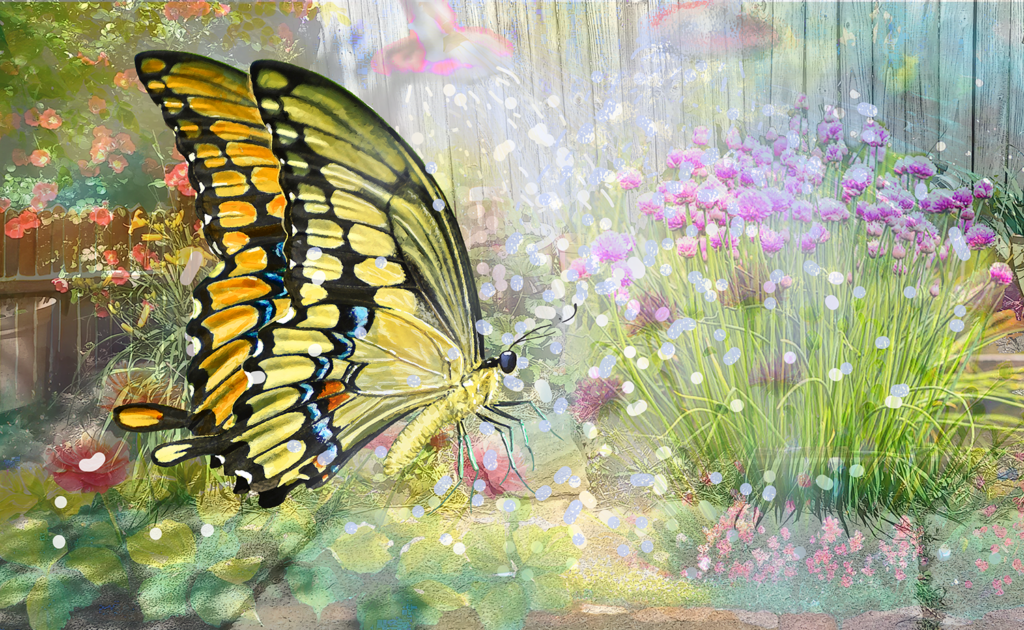
Out of nowhere, it appeared. It stayed only a moment—but it was enough.
An Eastern Tiger Swallowtail!
It moved lightly through the garden, almost as if it had always belonged there—pausing near the chives, just long enough to be seen.
And then it was gone.
Why It Stayed With Me
I stood there for a moment afterward.
Because something about it felt unexpected.
Not just because it was beautiful—but because it didn’t seem like the kind of thing that should happen there, in that small space behind the fence.
And yet, it had.
What I Didn’t Realize at the Time
Looking back, it wasn’t as random as it felt.
Butterflies are drawn to places that offer what they need—flowers for nectar, sunlight, shelter, and a healthy, living environment.
And chive blossoms, small as they are, are known to attract pollinators like bees and butterflies because of their nectar-rich flowers.
Without realizing it, I had created something that could support more than just what I planted.
A Living System
The soil had changed.
The worms had done their work.
The plants had grown stronger, and more flowers had appeared.
And when flowers are present, pollinators come—not just for beauty, but for survival. Many flowering plants depend on insects like butterflies to move pollen from one bloom to another.
What I had thought of as a small garden…
Was becoming part of something larger.
A Garden That Gives Back
That moment with the butterfly didn’t feel like something I had created.
It felt like something I had made space for.
A small shift—from controlling everything, to allowing something to grow.
And then watching what arrived.
Another Visitor
There was another moment like that.
A dragonfly landed on the back porch and stayed for a while, as if resting.
Again, unexpected.
Again, quiet.
And again, it felt like something more than a coincidence.
A Different Way of Seeing
These moments changed how I saw the garden.
- It was no longer just:
- a project
- a space to improve
- a garden for our enjoyment only…
It had become something alive.
Something that responded.
Sometimes, when we care for something long enough, it begins to give something back.
Not always in ways we expect.
Not always in ways we can explain.
But in small, fleeting moments that stay with us.
A butterfly passing through.
A dragonfly resting nearby.
A reminder that even a small garden can become part of something much larger.
- butterflies seek nectar, and habitat
- gardens with flowers and diversity naturally attract them
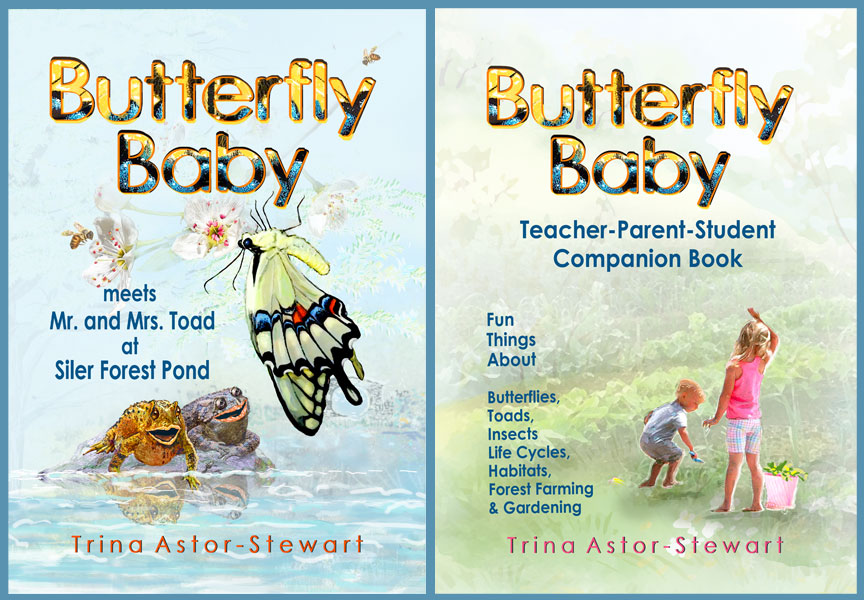
It was an ecosystem that I have endeavored to act on in the book Butterfly Baby. To build healthy soil, introduce some flowers, flowering herbs, vegetables, and diverse plants, and even keep some amazing weeds. To use no chemicals while keeping it as much of a natural habitat as possible.
That’s not just poetic—it’s real ecology: It is butterflies, bumblebees, and dragonflies, and an occasional honey bee arriving to call it home and drink of the floral nectar.
And somehow, in that small space, it felt like something had answered back.
The Books That Inspired the Garden
Find More of The Garden Series Articles:
I Didn’t Talk About the Worms at First | The Garden Series – Post 1
At first, it didn’t look like much |The Garden Series – Post 2
At first, I pulled them out without thinking. |The Garden Series – Post 3
The Day the Butterfly Came | The Garden Series – Post 4